bio

Short bio

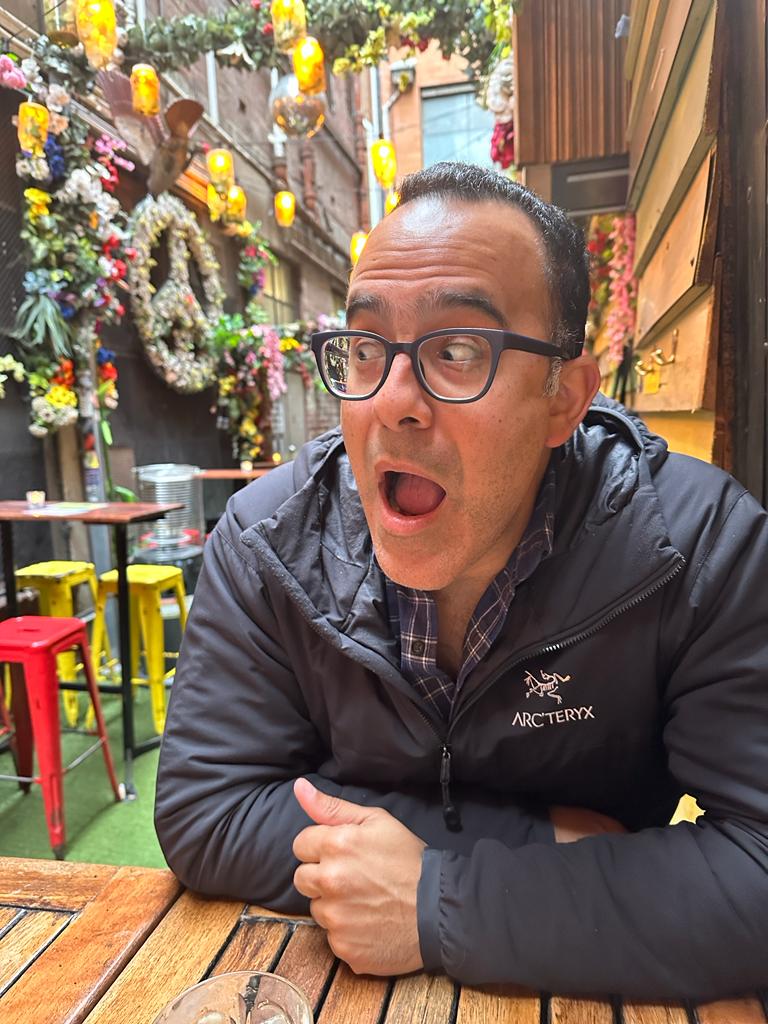
Prof. Ariel Ortiz-Bobea is Associate Professor in Applied Economics and Policy at Cornell University, with joint appointments at the Charles H. Dyson School of Applied Economics and Management and the Jeb E. Brooks School of Public Policy. He is also a Faculty Fellow at the Cornell Atkinson Center for Sustainability. His research broadly focuses on how people cope and adapt to environmental change, particularly in agriculture. He joined Cornell in 2014 after a short stint at Resources for the Future. Before graduate school, he served as Special Assistant to the Minister of the Environment of the Dominican Republic. He holds a PhD in Agricultural and Resource Economics from the University of Maryland, an MPA from Syracuse University (Maxwell), and a Diplôme d’Ingénieur from AgroParisTech (formerly the Institut National Agronomique Paris-Grignon) in France. He serves in editorial roles at various journals, including the Journal of the Association of Environmental and Resource Economists, Climatic Change, Environmental Research: Food Systems, and the Journal of Wine Economics.

My story (so far)

For prospective students and curious visitors: here is the path that has brought me so far into academia. I include it because a non-linear story can be reassuring if you are on one yourself.

I never planned to become a professor. I never really considered it. I write this for the reader without a planned path. Maybe this could be your spark.

I was born and raised in the Dominican Republic, the son of two agronomists. Weekends were countryside; the rest of life was Santo Domingo. My father, a first-generation college graduate, had done his PhD in France (my older brother was born there), and when the family moved back to the DR, my parents put us in a French school. As a native Spanish speaker, I learned to read and write in French, an unusual but defining feature of my upbringing. I did the Science Baccalauréat (Bac S) with a specialty in life sciences. I loved every science class. I played baseball and soccer, and went boogie boarding on weekends.

The plan in my teenage years was to take over the family business on my mother’s side, growing ornamental plants. My grandparents had built it from scratch: my grandfather was a writer and journalist, my grandmother a chemical engineer. Horticulture in France felt like the right next step. I was coming from a French high school, and France was a more affordable option than the US.

I applied to the three classes préparatoires I was allowed to (selective public boarding schools that serve as the main entryway to France’s top schools) and was rejected by all three. Plan B was the Université Paris-Sud, where my father had done his PhD. Unlike the classes préparatoires, French public universities historically cannot select their undergraduate students. Anyone with a baccalauréat can enroll. The only constraint is regional quotas that direct students to their local universities. The fancy new buildings my father remembered from the 1970s and 80s were a bit out of shape by the early 2000s.

I arrived in the summer of 1999. It was my first time in Europe. I was eighteen, and my French had only ever been a classroom language. I remember walking out of Gare Montparnasse and watching Parisians move past as if each one knew exactly where they were going. I recall this in slow motion. And a certain feeling of defiance, of being ready to take on a city I had only known from books.

I came with a sense of purpose. My parents and my grandmother (who was supporting me financially) helped without asking many questions. That felt like a quiet obligation to follow through. It was never pressure, but I would not let myself disappoint them.

University went better than I expected. The structure and discipline from my small school carried over, and to my surprise I did well. I ranked in the top 5 students of a cohort of 600+. After two years preparing for the concours, my father suggested I list INA P-G (the oldest and most prestigious agronomy school in France) at the top, and specialize in horticulture afterward. I sat the written and oral rounds and placed third out of more than 500 candidates nationwide. In the concours, your ranking determines which schools you can attend, and third place meant I got my first choice. Somehow, without the prépa, I had ended up where the prépa was supposed to lead.

That is how I ended up taking classes in a castle Charles X had bought in 1826 to house the school. I was the only person from the Americas in my cohort, fully immersed in French culture, and I made lasting friendships I still keep up with.

One of those classes covered the world food problem. It was taught by Marcel Mazoyer, who had succeeded René Dumont in the chair of comparative agriculture at INA P-G. Dumont, himself a graduate of the school, was the first ecologist presidential candidate in France. Many people in the world go hungry; most of them are farmers. As a young man from the developing world, growing flowers for a living suddenly felt frivolous. With my family’s support, I changed my specialty.

I think back to that class often. It is a reminder of the power a single teacher can have to open new doors for a student.

For my engineering thesis in my third year, a classmate and I went to the Kafa zone in Ethiopia, to a town called Bonga. The country and the people were beautiful. Our task was to understand the bottlenecks farmers faced and propose ways to remove them. We interviewed older and younger farmers, met ethnic minorities marginalized by local customs, and learned about the precarious lives of rural widows. Most households we visited produced almost everything they ate, buying only salt and oil. They brewed their own coffee, beer, and honey wine. Life was rich in its way, and full of constraints. What struck me most was that the problems we saw on the ground were not really problems of the field. They were policy problems decided in the capital. I started thinking about how to tool up to make a difference at that level.

That meant more education. I applied to US policy programs and was admitted to only one: the Maxwell School at Syracuse University, the oldest public administration school in the US. There I took my first serious economics courses, alongside negotiation and strategic planning. Economics fascinated me.

While at Maxwell I started looking for work, applying to many positions and hearing back from few. The one serious offer came from the Minister of the Environment of the Dominican Republic. I had the great fortune of having attended the same French school his children attended, which seems to have been enough to keep me from looking like too much of an outsider for a very political position.

I joined the Dominican government as his Special Assistant. It was a tumultuous time, with several political changes. I wrote speeches, dealt with protesters, coordinated with under-secretaries, talked to journalists. I was the oil in the machinery. I sat at the surface of many problems and never went deep into any of them. I found myself yearning for depth. I could also see I was not a politician. Even if I had been a halfway-decent one, that was not who I wanted to be. I wanted to make change from a different place. Maybe a PhD. Maybe the World Bank or FAO after that.

I applied to many US graduate programs and was admitted to only one: the University of Maryland. At the end of the day, you only need one chance, not many. You take it.

One of the schools that rejected me was Cornell, the very place that would hire me years later. The irony is not lost on me, and it is emblematic of how noisy academic admissions can be. Coming from a small though prestigious school, without a clearly defined academic or economic roadmap, I read as “too funky” or too risky to some committees, even though I had the math and training to handle the program.

At Maryland, I hoped to combine my interest in agriculture and development with a newer interest in environmental topics. I took micro, econometrics, and every course I could in development, ag, and environment. At the time, the obvious empirical avenue in development was running experiments, a path I did not see myself competing on against students coming out of MIT. I wanted to work with secondary data. I ended up on climate and agriculture, not in Africa, where I might have wanted, but in the US, where the data made the work possible.

In my fifth year I did an internship in the World Bank’s research department, conducting stated preference surveys to estimate the existence value of the Amazon forest. Separately, I received an offer for the Young Professionals Program, a highly sought-after track with more than 10,000 candidates for about 30 spots at the time. I also had the chance to take a Fellow position at Resources for the Future. An RFF Fellow is closer to a tenure-track research position than to a postdoc, though the salary is largely supported through external grants.

My internship had given me a sense of what work at the Bank would be like, and that informed my thinking. I had imagined the Bank or FAO as my destination since before grad school, so what surprised me was how much I had come to love research itself during the PhD. Someone can pay me to do this? It brought me back to the curious kid I had been. I turned down the YP and took what was, at the time, a pay cut to start a riskier research career. I do not regret it. I would have enjoyed the World Bank too, but I am much happier as a researcher.

Taking the RFF job is what kept me in research. I think of it as the lifeline that let me stay in academia, and I owe my path to a professorship to RFF and to the late Molly Macauley, the hiring manager who brought me in. Soon after, I moved to Cornell, which offered more flexibility for risky work and less fundraising pressure. I was tenured in 2020.

I love this job. My honest test is the lottery test: if I won tomorrow, I would still do this. The work feels like being a detective trying to understand the world. You are surrounded by curious people who get excited about what they are learning.

I feel very privileged to do this for a living. Part of the job, as I see it, is to encourage curious students with the idea that you can build a career out of your curiosity. It takes other things too: persistence, comfort with uncertainty, an unwillingness to give up. But the curiosity is the start.

The path here was not linear. I never planned to become a professor. Looking back, the pattern was clear: the prépas said no, most policy programs said no, most PhD programs said no, and many doors stayed closed on the job market too. And yet at each stage there was one yes, one lifeline, one small miracle that let me keep going.

From the outside, you often see other people’s successes, not their failures or rejections. Mine had plenty of both. What carried me through was not knowing where I would end up. It was finding the work itself worth doing. I have come to believe that what others see as resilience is mostly the byproduct of enjoying the path rather than fixating on the destination.

Do not miss the chance to be your own cheerleader, especially when everything else suggests you are not doing well. I ended up at a large research university doing work I find deeply fulfilling. I feel very fortunate.